
Knowledge Base
Solar for Manufacturing: Balancing Energy Intensity with Operational Continuity
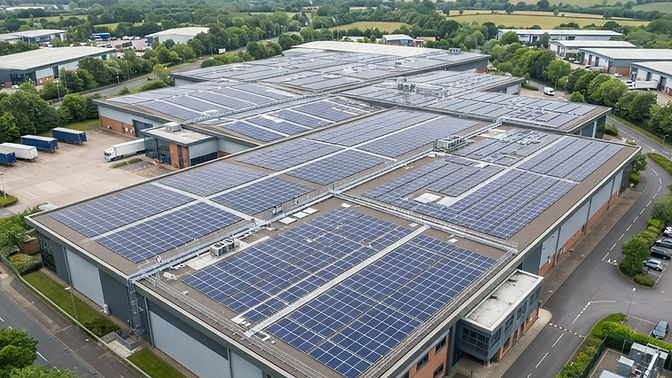
For UK manufacturers, energy price volatility is no longer just a line-item concern; it is a threat to operational continuity. Discover how integrating solar PV with battery storage creates a resilient, cost-predictable energy strategy.
The Manufacturing Energy Dilemma
UK manufacturing remains one of the most energy-intensive sectors in the economy. Following the significant price spikes observed between 2021 and 2024, businesses have faced a structural shift in energy costs [6]. For operations directors, the challenge is twofold: managing the bottom-line impact of volatile wholesale electricity markets while ensuring the high-uptime requirements of production lines are never compromised by grid instability.
As electricity prices remain structurally higher than pre-2021 levels [8], the traditional model of purchasing 100% of power from the grid has become a significant risk factor. Integrating Commercial Solar PV with Battery Energy Storage offers a pathway to mitigate this exposure, transforming energy from a variable cost into a managed asset.
Balancing Intensity with Continuity
Manufacturing facilities often operate on tight margins where energy represents a substantial portion of operational expenditure. The primary concern for many facilities managers is the intermittency of solar generation. However, modern hybrid systems address this through intelligent load management and storage.
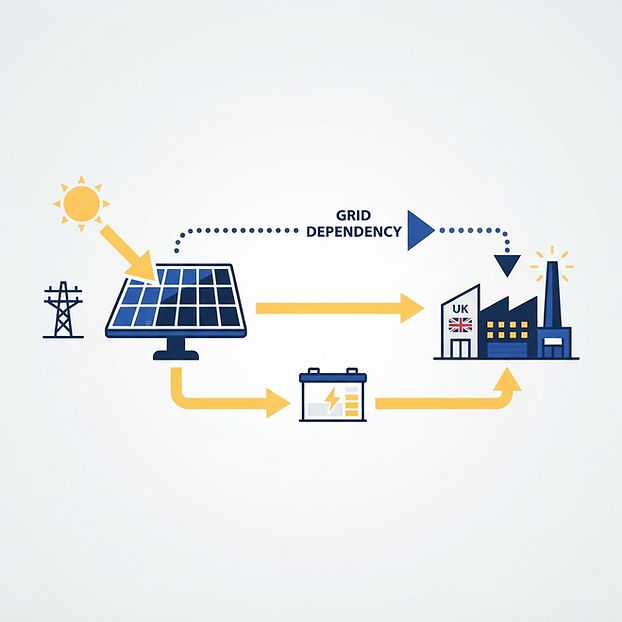
By deploying battery storage, manufacturers can capture excess solar generation during peak production hours or low-demand periods and discharge it during peak tariff windows. This 'peak shaving' capability not only reduces reliance on the grid during expensive periods but also provides a buffer against short-term grid fluctuations, supporting the operational continuity required for sensitive manufacturing processes.

Strategic Funding Routes
Deciding how to fund a solar transition is as critical as the technical design. Manufacturers must weigh the benefits of direct ownership against the cash-flow advantages of third-party funding.
Comparison of Funding Models
| Funding Route | Upfront Cost | Ownership | Operational Responsibility |
|---|---|---|---|
| Outright Purchase | High | Business | Business |
| Asset Finance | Low/None | Business | Business |
| Fully Funded (PPA) | None | Provider | Provider |
For businesses prioritising capital preservation, a Fully Funded Solar (PPA) allows for the installation of solar assets with no upfront investment. The business simply agrees to a long-term tariff for the electricity generated, effectively locking in energy costs and insulating the operation from future market volatility [5].
Long-Term Operational Value
Beyond immediate cost savings, the transition to on-site generation supports broader ESG objectives, which are increasingly mandated within manufacturing supply chains [8]. However, the success of these systems relies on rigorous Operations & Maintenance. A solar array is a long-term infrastructure investment; ensuring its performance through proactive monitoring and maintenance is essential to protecting the projected ROI.
For manufacturers, the goal is to move from a reactive energy posture to a proactive one. By evaluating your site’s specific energy profile—considering roof tenure, annual consumption, and load patterns—you can determine the most viable path toward energy independence. Whether through Asset Finance or a PPA, the objective remains the same: securing the energy resilience necessary to maintain competitive advantage in a volatile market.
Common questions
- How does solar improve energy resilience in manufacturing?
- Manufacturing facilities face significant risks from energy price volatility and grid instability, both of which can threaten production schedules. Integrating a solar PV system with battery storage provides a decentralized power supply that can offset grid reliance. In the event of grid fluctuations, this setup offers a layer of security, ensuring that critical machinery and essential building systems maintain power, thereby minimizing the risk of costly production downtime and operational disruptions.
- Is solar suitable for energy-intensive manufacturing processes?
- Yes, solar is highly beneficial for energy-intensive manufacturing, especially when combined with load-shifting strategies. While solar may not always cover the entirety of a high-consumption factory's base load, it can significantly lower the peak import requirements during daylight hours. By using smart energy management systems to align solar generation with high-energy production phases, manufacturers can significantly reduce their overall energy expenditure and improve the carbon footprint of their products.
- Can solar systems handle the power demands of heavy industry?
- Modern commercial solar installations are highly scalable and can be engineered to support the specific load profiles of industrial sites. When paired with high-capacity battery storage, these systems can assist in managing the startup and operational loads of heavy equipment. While solar is rarely a total replacement for grid connectivity in heavy industry, it acts as a primary energy pillar, providing a reliable, long-term, and cost-effective supplement to grid power that scales alongside your production needs.
Sources
- Commercial Solar & Battery Storage UK | SolarTech
- Knowledge Base | Commercial Solar & Battery Storage UK | Sol
- Commercial solar installation for manufacturing: a complete guide to costs, ROI and benefits
- Commercial Solar Knowledge Base | SolarTech UK
- Commercial Solar PPA UK | Solar PPAs for Businesses, No Upfront Cost
- What Higher Electricity Prices Mean for UK Manufacturing
- Commercial Battery Storage for UK Business | SolarTech
- UK Commercial Solar PV in 2026: Market Overview & Sector Breakdown · UK Solar Fund
- NEWS | Energy Market Volatility: How UK Businesses Are Adapting
- Commercial Solar Finance UK | Free Quote | FCA Regulated ...