
Knowledge Base
The CFO’s Guide to Commercial Solar PPAs: Risk, Liability, and Long-Term Value
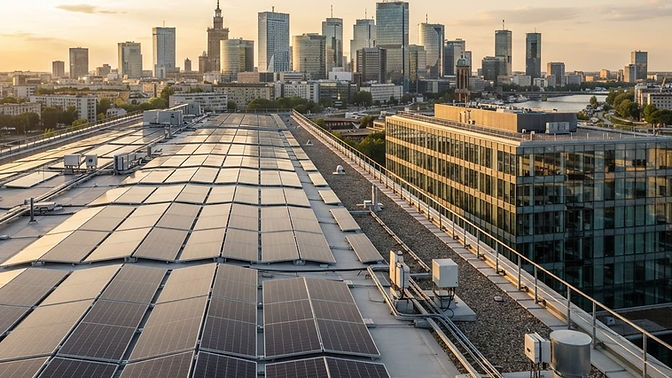
A strategic analysis for UK finance directors on the financial and legal considerations of commercial solar Power Purchase Agreements (PPAs) versus capital expenditure.
Comparative Overview: Procurement Models
| Feature | Outright Purchase | Asset Finance | Fully Funded Solar (PPA) |
|---|---|---|---|
| Capex | Full Upfront | Financed | None |
| Opex | Internal responsibility | Internal responsibility | Managed by provider |
| Tax Treatment | Capital Allowances apply | Capital Allowances apply | Funder retains allowances |
Decision Matrix: Need help choosing a funding route? View our Funding overview.
Market Context and Accounting Implications
Under a commercial PPA, a third-party investor funds, owns, and maintains the system for a long-term duration. The business purchases generated electricity at a contracted rate, providing a hedge against grid price volatility. For CFOs, it is critical to note that under IFRS 16, long-term PPA commitments may require assessment to determine if the contract contains a lease, which can impact balance sheet reporting. Because the funder retains ownership, they typically claim the capital allowances; the site host generally does not receive these specific tax benefits. VAT remains applicable, though it is recoverable as input tax for VAT-registered businesses.
Strategic Due Diligence: CFO Checklist
When evaluating a PPA, focus your due diligence on these five critical areas:
- Change-in-law clauses: How does the contract account for legislative shifts?
- Change-of-control provisions: Are there restrictions if the company is sold?
- Assignment and Novation: What are the requirements for transferring the agreement during a property sale?
- Exit costs: Are there defined financial penalties for early termination?
- Maintenance responsibility: Confirm the provider’s KPIs for ongoing system performance and upkeep.
Download our PPA Risk Matrix to document these requirements during your procurement process.
For those prioritizing full asset control and capital allowance eligibility, an Outright Purchase remains the primary alternative. If your priority is immediate, no-cost carbon reduction, our Fully Funded Solar (PPA) route offers a proven mechanism for implementation. For firms seeking to manage their own assets, we also offer specialized Operations & Maintenance support. Additionally, integrating Battery Energy Storage can further enhance the value derived from any procurement model. We invite you to contact us to discuss the feasibility of these models for your facility. Visit our Contact page to initiate a consultation.
Common questions
- What is a commercial solar PPA?
- A commercial Power Purchase Agreement (PPA) is a contract where a third party owns and operates a solar system on your site. The business agrees to purchase the generated electricity at a set price, often lower than grid rates, for an agreed term. This model allows companies to access renewable energy and reduce carbon footprints without the upfront capital expenditure. It shifts the burden of maintenance and performance risk to the provider, making it an attractive option for companies prioritising operational cash flow over asset ownership.
- Should I choose Capex or a PPA for my solar project?
- The choice between Capex and a PPA depends on your company's financial strategy. A Capex approach involves an upfront investment, granting full ownership of the system, higher long-term savings, and full control over the asset. However, it requires significant capital and carries ongoing maintenance responsibilities. A PPA, by contrast, removes the upfront cost and risk, providing immediate energy savings without requiring capital outlay. Finance directors must weigh the benefits of asset appreciation and maximum savings against the need for off-balance-sheet solutions and operational simplicity.
- What are the financial risks of a solar PPA?
- While PPAs offer predictability, they involve long-term contractual commitments, often spanning 15 to 25 years. Key risks include the potential for future energy prices to fall below the agreed PPA rate and the long-term obligation to purchase power even if operational energy needs change. It is critical to ensure the contract includes flexibility for site changes or site closures. Additionally, the creditworthiness of the PPA provider is important, as the long-term reliability of the solar system depends on their ability to maintain the asset throughout the contract duration.
Materially updated 17 October 2026
Sources
- Spirit Energy - Commercial Finance
- EvoEnergy - Capital Allowances and Solar
- Solar Power Purchase Agreements (SPPA) - Legal Considerations
- SolarTech UK - Understanding Solar PPA Benefits
- Commercial Solar Finance Options UK | PPA, Lease
- Is a Solar PPA On or Off Balance Sheet? (IFRS 16) | SPPA
- SolarTech UK - Understanding Solar PPA Benefits