
Commercial solar economics, PPAs and funding
Beyond the Credit Gap: Navigating Funding Routes for Mid-Market Commercial Solar
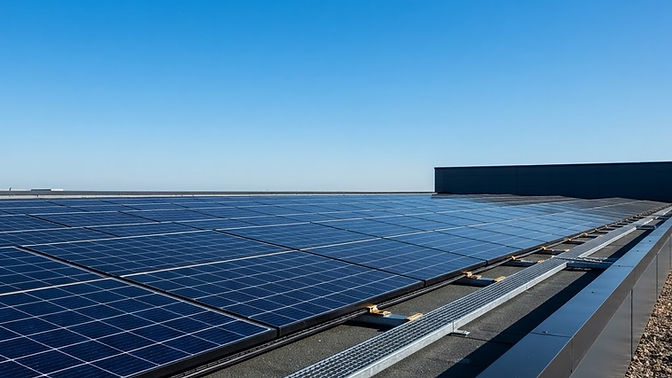
The transition to commercial solar is often stalled by a perception that the 'Fully Funded' model is the only route to adoption. In reality, recent market analysis and government evidence highlight that stringent credit requirements for Corporate Power Purchase Agreements (CPPAs) can act as a significant barrier for many mid-market businesses.
The Credit Gap: Why Not Every Business Qualifies for a PPA
The transition to commercial solar is often stalled by a perception that the 'Fully Funded' model is the only route to adoption. In reality, recent market analysis and government evidence highlight that stringent credit requirements for Corporate Power Purchase Agreements (CPPAs) can act as a significant barrier for many mid-market businesses [4, 6, 10].
For many UK commercial property owners and landlords, the 'credit gap'—the threshold of financial standing required by PPA funders—should not be a terminal obstacle. Instead, it is a prompt to evaluate alternative capital structures that align better with specific balance sheet requirements and ownership goals.
A Fully Funded Solar (PPA) model works by having a third-party funder own the system. Because the funder carries the technical and performance risk over a 15–20 year term, they require high levels of financial security from the energy buyer. If your business is mid-market or does not hold a premium credit rating, you may find that PPA providers either decline the project or demand prohibitive contract terms that undermine the financial benefit.
Evaluating Alternative Funding Routes
When the PPA route is unavailable or undesirable, businesses have two robust alternatives that shift the focus from 'counterparty credit' to 'asset-based value.'
| Funding Route | Upfront Cost | Ownership | Tax Relief | Best For |
|---|---|---|---|---|
| Fully Funded (PPA) | £0 | Funder | Funder claims | Long-term occupancy; limited capex |
| Asset Finance | Low/None | Business (at end) | Business claims | Preserving cash flow; asset control |
| Outright Purchase (EPC) | Full | Business | Business claims | Maximising lifetime savings |
1. Asset Finance: The Middle Ground
Asset finance—often structured as a hire purchase agreement—allows a business to spread the cost of an installation over a fixed term (typically up to 10 years). Unlike a Fully Funded Solar (PPA), where the provider retains ownership and the associated tax benefits, Asset Finance lets your business retain ownership of the solar installation. Monthly repayments are often structured to align with the energy savings generated by the system, making the project cash-flow positive or neutral from the outset.
2. Outright Purchase (EPC): Capturing Lifetime Value
For property owners with available capital, Outright Purchase remains the gold standard for long-term financial returns. By owning the system outright, your business is eligible for capital allowances, such as the Annual Investment Allowance (AIA), which can provide significant tax relief by allowing you to write off the cost of the system against taxable profits. Furthermore, an owned solar array becomes part of the building’s infrastructure, potentially enhancing its EPC rating and commercial appeal without the long-term contractual obligations of a third-party PPA.
Strategic Considerations for Decision-Makers
When navigating these routes, finance directors and estates managers should focus on three primary metrics:
- Total Cost of Ownership (TCO): Do not compare only the first-year electricity rate. Factor in the long-term cost of a PPA escalator versus the fixed, known payments of an asset finance agreement.
- Operational Control: Consider whether your site strategy includes potential building sales, renovations, or tenancy changes. Outright ownership provides the flexibility to manage the asset as part of the property portfolio.
- The 'Whole-System' Cost: Ensure your funding route covers the full scope of works—including grid connections, scaffolding, and roof integrity assessments—rather than just the cost of panels.
At SolarTech UK, we believe that the funding route should be a consequence of your business’s financial and operational strategy. Whether you are an industrial manufacturer, a retail landlord, or a cold storage operator, the 'right' route depends on your specific balance sheet and long-term occupancy plans. Explore Commercial Solar PV solutions, review our Funding overview for a deeper breakdown of routes, or Contact our team for a tailored appraisal of your site’s potential.
Next step
A tailored conversation, not a sales script.
Not sure which funding route aligns with your capital strategy and site occupancy? Request a comprehensive, site-specific commercial solar proposal.