
Commercial solar economics, PPAs and funding
Navigating the New NESO Grid Connection Reforms: What Commercial Property Owners Need to Know
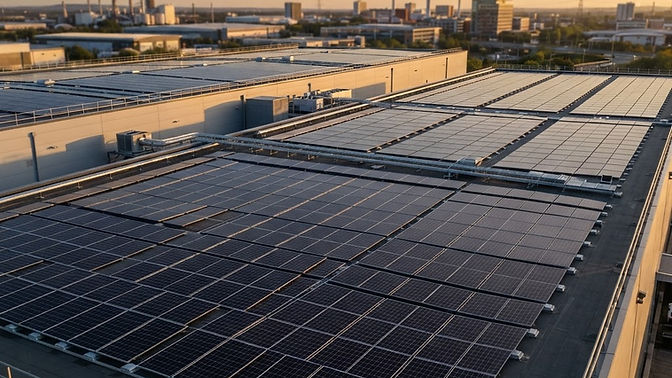
The UK grid connection landscape has shifted from 'first-come, first-served' to a 'first-ready, first-connected' model. We break down what the Gate 2 reforms mean for your commercial solar project viability.
The End of the 'First-Come' Era
For years, the UK grid connection queue was defined by a 'first-come, first-served' approach, which inadvertently allowed speculative projects to reserve capacity without the intent or ability to build. This created a bottleneck that hindered genuine commercial development. The National Energy System Operator (NESO) and Ofgem have now fundamentally restructured this process, moving to a 'first-ready, first-connected' model [3, 4]. For commercial property owners and finance directors, this transition is not merely administrative—it is a critical factor in determining the feasibility of Commercial Solar PV installations.
Understanding the Gate 2 to Whole Queue (G2tWQ) Process
The core of this reform is the Gate 2 to Whole Queue (G2tWQ) process [6]. Under this new framework, projects are no longer guaranteed a place simply by being early in the queue. Instead, they must demonstrate 'readiness' and 'strategic alignment' to secure a Gate 2 offer [3, 6]. A Gate 2 offer provides a confirmed connection date and point of connection, effectively acting as the 'green light' for project delivery [4].
As of mid-2026, the transition is well underway, with hundreds of projects already receiving their Gate 2 offers [5]. However, the process has faced logistical challenges, leading to recent adjustments in the issuance timetable to ensure accuracy and fairness [1, 2, 9].
Why This Matters for Your Commercial Assets
For businesses looking to deploy solar, the implications are twofold:
- Removal of Speculative Barriers: By prioritising projects that are ready to build, the reforms aim to clear the 'zombie' projects that previously blocked capacity [7, 8]. This should, in theory, make it easier for viable, shovel-ready commercial projects to secure the grid access they need.
- The 'Readiness' Requirement: To succeed, your project must now meet rigorous criteria regarding commercial maturity and procurement activity [7]. This means that early-stage planning, site surveys, and Funding overview must be robust before you can expect a firm connection date.
Key Figures in the Reform Process
- 713: The number of projects that had received Gate 2 offers as of June 2026 [5].
- 31 October 2026: The revised deadline for the issuance of Gate 2 Phase 1 connection offers [1, 2].
- Mid-March 2027: The expected date for the final batch of Gate 2 offers to be issued [9].
Strategic Implications for Decision-Makers
For operations directors and estates managers, the shift necessitates a more proactive approach to project development. Relying on legacy assumptions about grid availability is no longer sufficient. Whether you are considering Fully Funded Solar (PPA) or an Outright Purchase (EPC), your project's ability to demonstrate 'readiness' is now the primary determinant of its timeline.
If your site is in an area with constrained grid capacity, the integration of Battery Energy Storage may become an essential component of your strategy, potentially helping to manage export limitations and improve the overall business case for your solar investment.
SolarTech Perspective
At SolarTech UK, we advise clients to treat grid connection as a critical path item from day one. The 'first-ready, first-connected' model rewards those who have their technical and financial ducks in a row. We recommend that businesses conduct a thorough feasibility study early in the process to ensure that their project meets the necessary criteria for a successful Gate 2 application.
While the reforms are designed to speed up the connection of viable projects, the complexity of the new system means that professional guidance is more valuable than ever. We help our clients navigate these regulatory hurdles by ensuring that every project we manage is positioned to meet the stringent requirements of the new queue system.
For those currently evaluating their energy strategy, we recommend reviewing your site's specific connection status and ensuring your project documentation is audit-ready. If you are ready to assess your site's potential, Contact our team to discuss your requirements.


Common questions
- What is the 'first-ready, first-connected' model?
- The 'first-ready, first-connected' model replaces the traditional 'first-come, first-served' approach for UK grid connections. Under this system, projects must demonstrate clear progress and readiness to proceed through specific milestones to maintain their position in the connection queue. This change is designed to clear bottlenecks created by speculative or stalled projects. For commercial property owners, this means that site preparation, procurement, and technical readiness are now fundamental requirements for securing a grid connection slot.
- What are the Gate 2 reforms?
- Gate 2 reforms represent the next phase of the UK's grid connection management. These regulations require developers to meet strict technical and financial progress criteria before being granted a connection offer. The aim is to ensure that only serious, viable projects occupy queue capacity. Commercial property owners planning solar installations must be aware of these documentation and milestone requirements to avoid delays, as failing to meet Gate 2 criteria can result in the loss of a connection spot.
- How do these reforms affect project viability?
- Grid connection reforms fundamentally change the risk profile of commercial solar projects. By emphasizing readiness over simple queue placement, the cost and time required to reach a 'ready' status have increased. Projects that lack proper planning or clear site-ready status may face significant delays or inability to secure capacity. Consequently, early-stage engagement with technical partners who understand these regulatory nuances is essential to ensure your commercial project remains viable and capable of meeting the new connection criteria.
- What is the primary difference between the old grid connection system and the new 'first-ready, first-connected' model?
- Previously, the UK grid connection queue operated on a 'first-come, first-served' basis, which allowed speculative projects to reserve capacity without being ready to build, often causing bottlenecks. The new system, implemented by NESO and Ofgem, shifts to a 'first-ready, first-connected' model. Under this framework, connection priority is no longer based on application date but on the project's demonstrated maturity. Developers must now prove they are ready to proceed with construction to receive a Gate 2 offer, which secures a confirmed connection date and point of connection for their solar installation.
- What does 'readiness' mean under the Gate 2 to Whole Queue (G2tWQ) process?
- Under the new G2tWQ process, 'readiness' refers to the requirement that projects demonstrate clear commercial maturity and active procurement progress to secure a connection. It is no longer sufficient to simply be in the queue; instead, businesses must provide evidence of robust planning, site surveys, and finalized funding arrangements. This shift aims to remove 'zombie' projects that previously blocked capacity. For commercial property owners, this means that comprehensive preparation and audit-ready documentation are now the primary determinants for obtaining a firm connection offer and moving a project from the planning phase to execution.
- How can a commercial property owner improve their chances of securing a grid connection in a constrained area?
- To secure a connection in areas with limited grid capacity, commercial property owners must treat grid connection as a critical path item from the earliest stages of project development. It is essential to perform a thorough feasibility study to ensure the proposal meets the stringent requirements for a Gate 2 application. Additionally, integrating battery energy storage into the system design may help manage export limitations, potentially improving the project's viability. Proactive management of technical and financial documentation is necessary to ensure the project meets the required criteria for readiness under the current regulatory framework.
Materially updated 5 November 2026
Sources
- Ofgem agreement on alternative Gate 2 to Whole Queue (G2tWQ) timetable
- Ofgem agreement to a further alternative timetable for issuing Gate 2 Phase 1 connection offers
- Decision: Gate 2 Criteria Methodology
- Moving to a reformed grid | Ofgem
- Connections reform timeline | National Energy System Operator
- About Connections Reform | National Energy System Operator
- Ofgem acts to free up grid capacity by tackling speculative data centre projects
- Demand connections reform | Ofgem
- Ofgem agreement regarding the timetable for issuing connection offers under the Gate 2 to Whole Queue process
- Ofgem Response on Protected Projects Relief Request